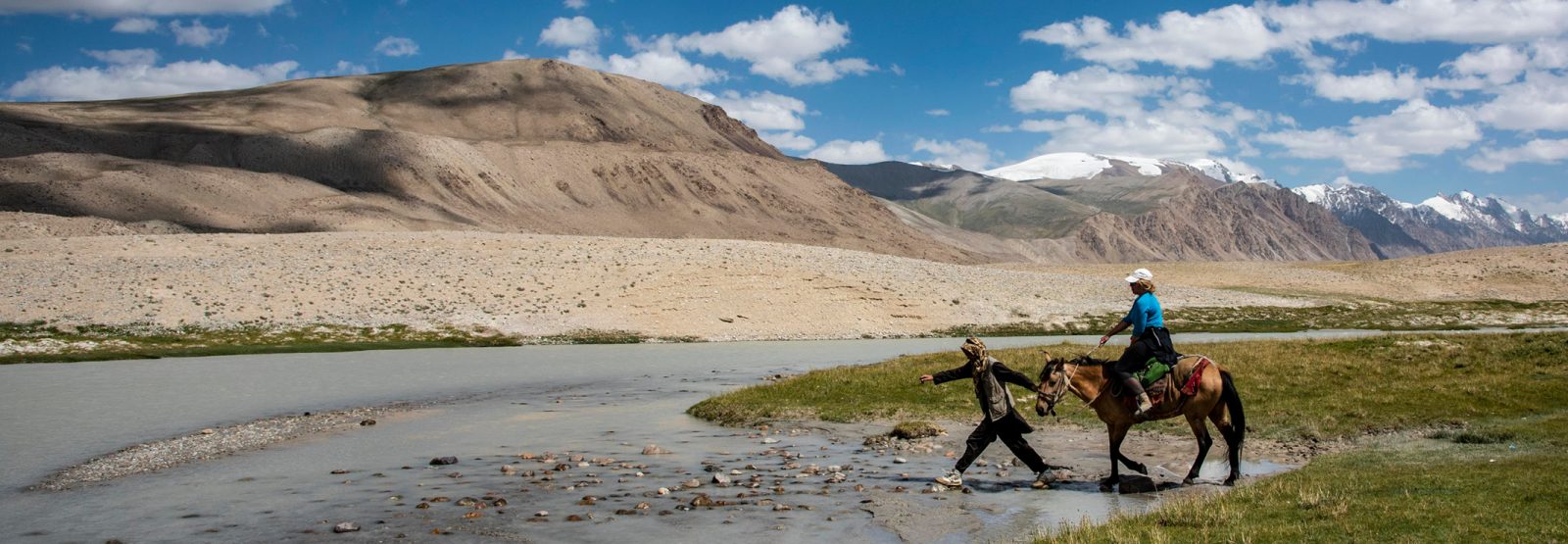
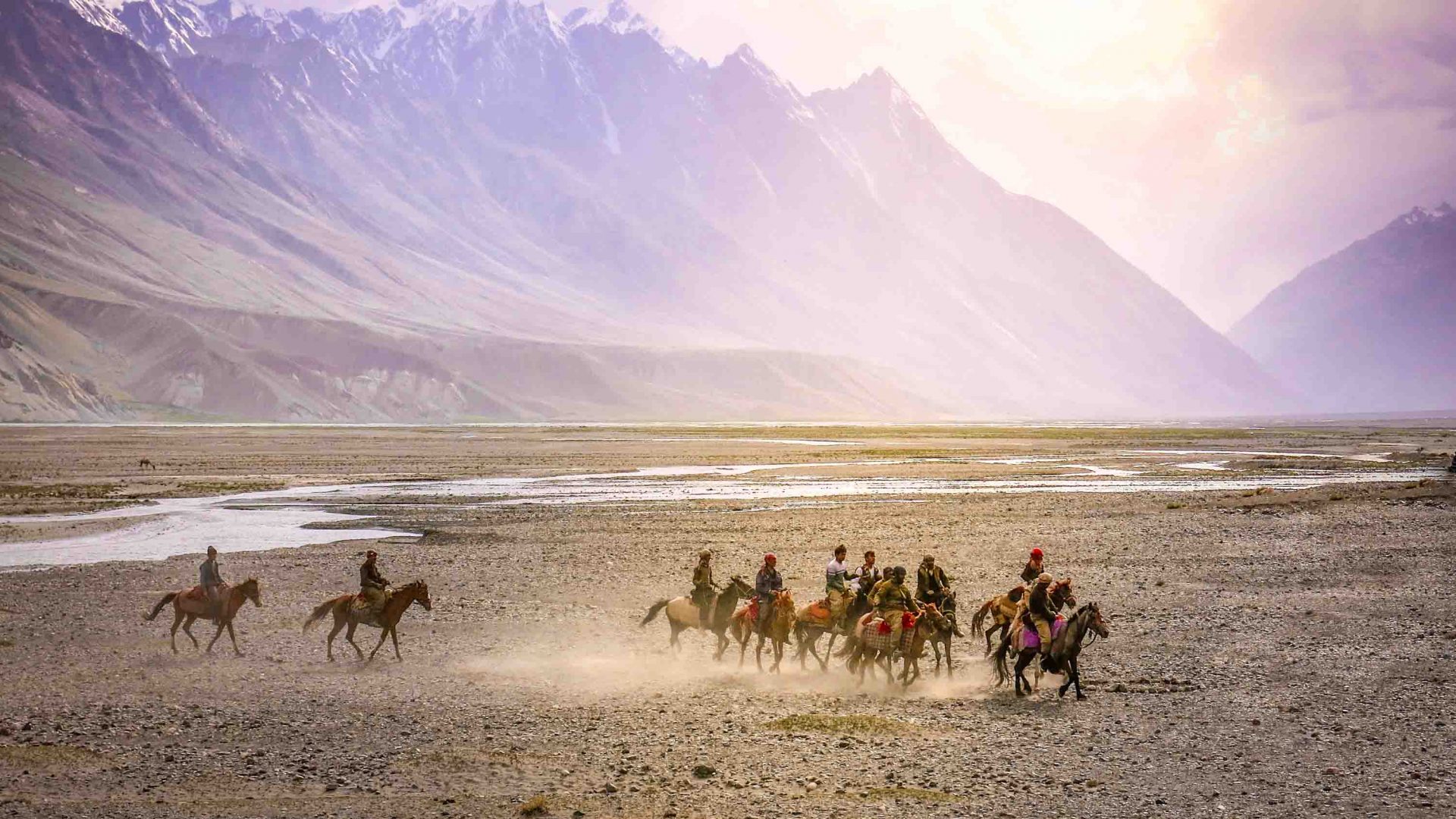
Wakhan or “the Wakhan” is a rugged, mountainous part of the Pamir, Hindu Kush and Karakoram regions of Afghanistan. Wakhan District is a district in Badakshan Province.
In recent years the Wakhan has become a destination for adventurous trekkers, and several tour companies offer trips to the area. BBC correspondent John Simpson has recommended the area as a place to take a wonderful, and relatively safe, holiday. Kate Humble, a BBC television presenter, reports that the area is beautiful and the people friendly
The Wakhan plays a large role in Greg Mortenson’s book, Stones into Schools. This book tells the story of the building of a school in the Kyrgyz village of Bozai Gumbaz. The factual accuracy of this account is strongly disputed in Jon Krakauer’s ebook Three Cups of Deceit.
The Wakhan is located in the extreme north-east of Afghanistan. It contains the headwaters of the Amu Darya (Oxus) River and was an ancient corridor for travellers from the Tarim Basin to Badakshan.
Until 1883 the Wakhan included the whole valley of the Panj River and the Pamir River, as well as the upper flow of the Panj River known as the Wakhan River. An 1873 agreement between UK and Russia split the Wakhan by delimiting spheres of influence for the two countries at the Panj and Pamir rivers, and an agreement between Britain and Afghanistan in 1893 confirmed the new border. Since then, the name Wakhan is now generally used to refer to the Afghan area south of the two rivers. The northern part of the historic Wakhan is now part of the Gorno-Badakhshan Autonomous Province in Tajikistan.
The only road into the Wakhan is a rough track from Ishkashim past Qila-e Panja to Sarhad-e Broghil. Paths lead from the end of the road to the Wakhjir Pass, a mountain pass leading to China which is closed to travellers.
The western part of the Wakhan, between Ishkashim and Qila-e Panja, is known as Lower Wakhan, which includes the valley of the Panj River. The valleys of the Wakhan River, the Pamir River and their tributaries, and the terrain between, are known as Upper Wakhan.
The eastern extremity of Upper Wakhan is known as the Pamir Knot, the area where the Himalayas, Tian Shan, Karakoram, Kunlun, and Hindu Kush ranges meet. West of the Pamir Knot is the Little Pamir, a broad U-shaped grassy valley 100 km long and 10 km wide, which contains Chaqmaqtin Lake, the headwaters of the Aksu or Murghab River. At the eastern end of the Little Pamir is the Tegermansu Valley, from where the closed Tegermansu Pass (4,827 m) leads to China. The Great Pamir or Big Pamir, a 60 km long valley south of Zorkol lake, drained by the Pamir River, lies to the northwest of the Little Pamir.
The mountain range that divides the two Pamirs is known as the Nicholas Range. West of the Nicholas Range, between the Great Pamir and the lower valley of the Wakhan River, is the Wakhan Range, which culminates in the Koh-e Pamir (6,320 m).
The roads in the region have small shrines to Ismaili Muslim pirs and are adorned with “special stones and curled ibex and sheep horns”, which are symbols of purity in the Zoroastrian faiths, once present in the region before the arrival of Islam.
 Afghanistan